
A cozy bedroom does not have to look perfectly styled or feel like something from a furniture catalog. Sometimes, it is simply a room where the lighting feels soft at night, the bed is comfortable, and everything around you feels calm enough to let you slow down.
If your bedroom feels a little plain, cold, or unfinished, you probably do not need to completely redecorate it. A few thoughtful changes can make a surprisingly big difference. Adding warmer lighting, layering your bedding, bringing in natural textures, or even clearing a little visual clutter can make the room feel much more inviting.
The best part is that cozy bedroom ideas can work with almost any style. You can have a small bedroom, a modern space, a rented apartment, or a simple neutral room and still create that warm, relaxed feeling without spending a fortune.
The goal is not to make your bedroom look perfect. It is to make it feel like a place you actually want to come back to at the end of the day.
Here are 10 simple ways to make your bedroom feel warmer, softer, and more relaxing.

1. Start With Soft, Warm Lighting
Lighting can completely change the feeling of a bedroom. A room that feels ordinary during the day can become warm and relaxing in the evening simply by switching from harsh overhead lighting to softer sources of light.
Instead of relying only on your main ceiling light, try adding a bedside lamp, a small table lamp, or another warm light source near the bed. Having light at different levels makes the room feel more layered and comfortable.
A bedside lamp with a fabric or frosted shade can work especially well because it gives off a softer glow. If you like reading before bed, place one on your nightstand so the light is useful as well as decorative.
You can also use a small lamp on a dresser or shelf to create another warm corner. You do not need several expensive lamps. Even one additional light source can make the room feel noticeably different.
If your bedroom already has plenty of natural light during the day, keep the windows relatively open and let that daylight do most of the work. Then, as evening arrives, switch to smaller, warmer lights instead of turning on every light in the room.
The result should feel relaxed rather than overly bright.

2. Layer the Bed With Cozy Textures
The bed is usually the largest piece of furniture in a bedroom, so changing the way it looks can have a big effect on the entire space.
Instead of using only a flat comforter or duvet, try adding a few different layers. A soft duvet, a folded quilt, a knitted throw, and a couple of comfortable pillows can make the bed feel much more inviting.
You do not need to use lots of colors. In fact, a simple combination of cream, beige, white, soft gray, or muted earthy tones can look incredibly cozy when the textures are varied.
Think about how each fabric feels rather than choosing everything based on appearance. Cotton can keep the bed feeling fresh and comfortable, while a knitted throw can add warmth and visual texture.
You can also fold a blanket across the bottom third of the bed rather than spreading it over the entire mattress. This creates a relaxed, layered look without making the bed feel overly styled.
The goal is to make the bed look comfortable enough that you naturally want to climb into it at the end of the day.

3. Choose a Calm Bedroom Color Palette
Color has a strong effect on how a bedroom feels. If your space currently has lots of bold colors or competing patterns, simplifying the palette can instantly make it feel calmer.
Warm neutrals are an easy place to start. Shades such as beige, cream, oatmeal, warm gray, soft brown, and off-white can create a peaceful background without making the room feel boring.
If you prefer a little more color, choose muted shades rather than very bright ones. Soft sage green, dusty blue, muted terracotta, or gentle blush can add personality while still keeping the room relaxing.
You do not have to repaint the entire bedroom to create a calmer color scheme. Start with smaller items such as bedding, curtains, pillows, rugs, or artwork.
A simple color formula can also help. Choose one main neutral, one secondary color, and one small accent shade.
For example, cream bedding with beige curtains and a few muted green accents can create a warm and natural feeling without making the room look too coordinated.
Keeping the palette simple allows textures and personal details to stand out.

4. Add a Soft Rug Beside the Bed
If your bedroom has hardwood, laminate, tile, or another hard floor, a rug can make the room feel warmer almost immediately.
You do not necessarily need a large area rug. A smaller rug or runner beside the bed can give your feet something soft to land on in the morning.
Choose a rug with a comfortable texture and a color that works with the rest of the bedroom. Neutral shades are easy to work with, but a subtle pattern can also add interest if the rest of the room is fairly simple.
For a small bedroom, placing matching rugs on either side of the bed can create a balanced look. If you have more floor space, a larger rug positioned partly underneath the bed can make the entire sleeping area feel more connected.
Think about practicality too. A bedroom rug should be easy enough to clean and comfortable to walk on. If you have pets or prefer low-maintenance decor, choose a material that fits your everyday routine.
Sometimes, a small change under your feet can make the whole bedroom feel noticeably more comfortable.

5. Create a Simple Bedside Corner
Your nightstand does not need to be filled with decorative objects. A simple bedside setup can actually make the room feel more peaceful.
Start with the things you genuinely use. A small lamp, a book, a glass of water, or a simple tray may be all you need.
If you want to add decoration, choose one meaningful object instead of several small pieces. A small vase, framed photograph, candle, or plant can give the corner some personality without making it feel crowded.
Keeping the surface relatively clear is especially helpful if your bedroom already has a lot of furniture. Visual clutter can make a relaxing room feel busier than it needs to be.
You can also use the space underneath your nightstand. A small basket can hold extra blankets, books, chargers, or other items that you want nearby but do not want sitting out.
The idea is to create a bedside area that feels useful, calm, and easy to maintain.

6. Bring in Natural Elements
Natural materials can make a bedroom feel warmer and more grounded. You do not need to completely change your furniture to bring this feeling into the room.
Try adding small touches of wood, woven materials, rattan, cotton, linen, or greenery.
A wooden tray on the nightstand, a woven basket beside the dresser, or a rattan lamp can add natural texture without overwhelming the space.
Plants can also make a bedroom feel more alive. If your room gets enough natural light, a small houseplant can work beautifully on a dresser, shelf, or windowsill.
If you do not want to take care of plants, dried branches or realistic faux greenery can create a similar visual effect with very little maintenance.
The key is to mix textures naturally. A smooth wooden surface next to soft bedding and a woven basket can feel much more interesting than a room where everything has the same finish.
Natural details also work well with neutral color palettes, making them an easy choice for a calm bedroom.

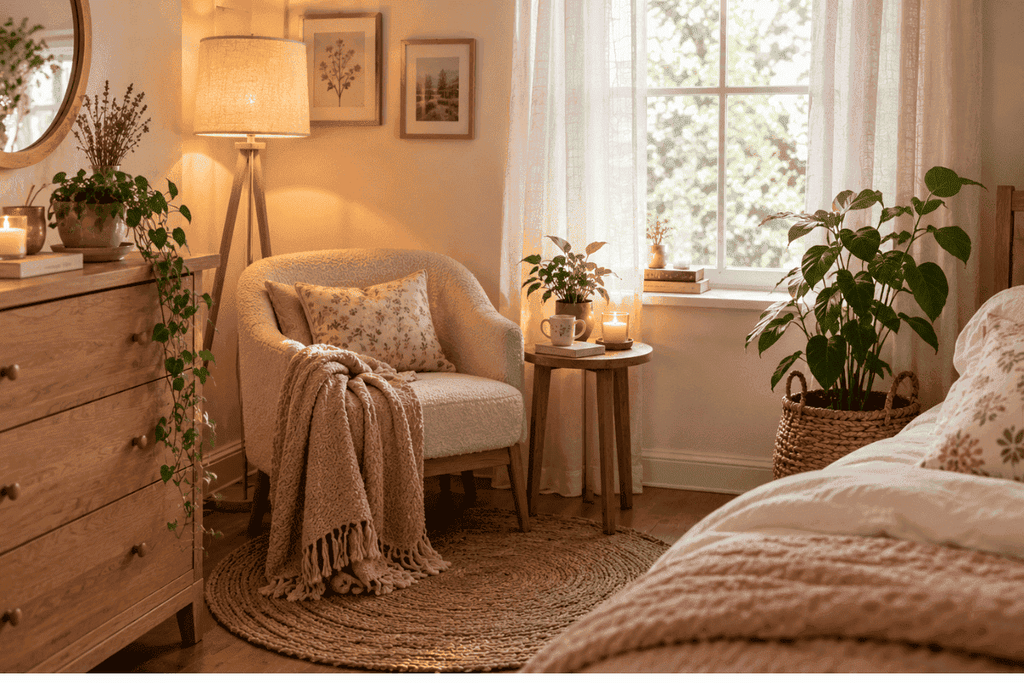
7. Make One Small Reading Nook
If you have an unused corner in your bedroom, turn it into a small space where you can slow down.
You do not need a large room or a full reading area. A comfortable chair, a small side table, and a floor lamp can be enough.
This little corner can become a place for reading before bed, drinking your morning coffee, journaling, or simply sitting somewhere other than the bed for a few minutes.
If your bedroom is small, look for furniture that does not take up much floor space. A compact accent chair or a simple bench near a window can work well.
Add one cushion or a soft throw to make the area more comfortable without filling the corner with unnecessary decor.
Creating a separate spot for relaxing can also make the bedroom feel more intentional. Instead of using the bed for everything, you have a small area dedicated to quiet moments.
Even if you only use it for ten minutes at a time, it can become one of the most enjoyable parts of the room.
8. Use Curtains to Soften the Room
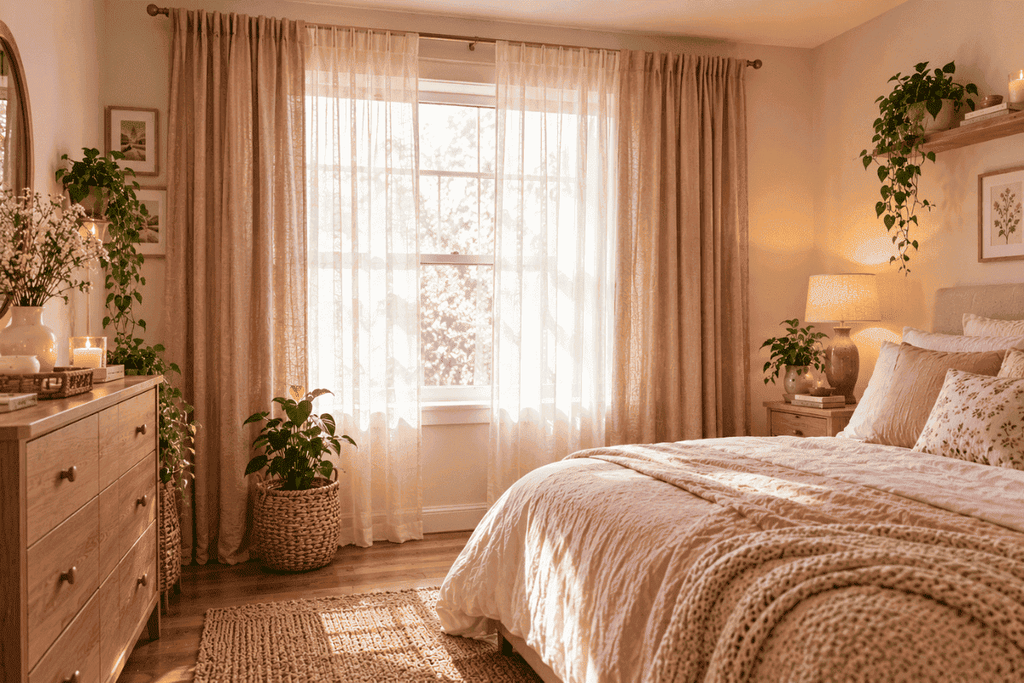
Curtains are easy to overlook, but they can make a bedroom feel much softer.
If your windows currently have basic blinds or very thin curtains, adding fabric panels can bring more warmth and texture into the room.
Linen-look curtains, cotton curtains, or simple neutral panels can work particularly well with cozy bedroom styles. Choose a color that blends naturally with your bedding and walls rather than creating a strong contrast.
You can also layer sheer curtains with thicker curtains if you want more flexibility. Sheer panels allow natural light into the room during the day, while heavier curtains can make the bedroom feel more private and cozy in the evening.
For a more polished look, hang curtains slightly higher and wider than the actual window when possible. This can make the window appear larger and give the room a softer, more finished appearance.
You do not need dramatic patterns or expensive window treatments. Simple fabric and the right placement can make a noticeable difference.
9. Keep Clutter Out of Sight
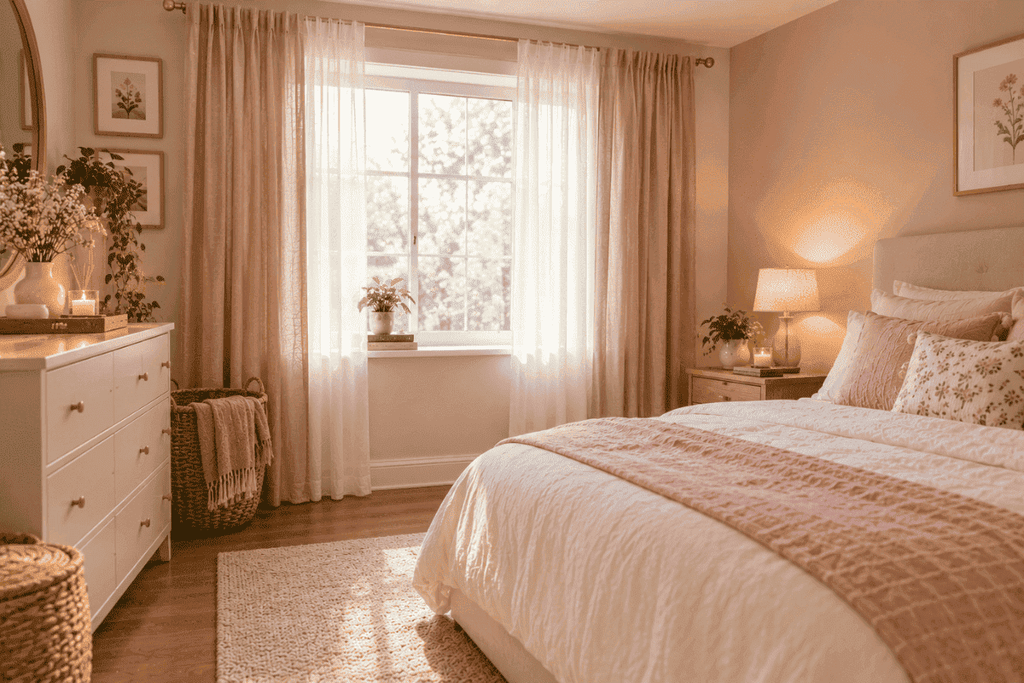
Sometimes the easiest way to make a bedroom feel cozier is to remove things rather than add more.
A room can have beautiful bedding, warm lighting, and thoughtful decor, but if clothes, chargers, papers, and random objects are scattered everywhere, it may still feel stressful.
Start by giving everyday items a specific home. Use baskets for blankets, drawers for smaller belongings, and simple organizers for things that tend to collect on your nightstand or dresser.
You do not have to completely reorganize your bedroom in one day. Begin with the areas you see most often.
The nightstand is a good place to start. Clear away anything you no longer need there and keep only the items you use regularly.
You can also create a quick five-minute reset at the end of the day. Put clothes away, return books to their place, clear the nightstand, and straighten the bedding.
These small habits can make the bedroom feel calmer without requiring any new decor.
A cozy space is not just about how much you add. Sometimes, it is about giving the room enough empty space to breathe.
10. Add Personal Details That Feel Like You
The final touch to a cozy bedroom is personality.
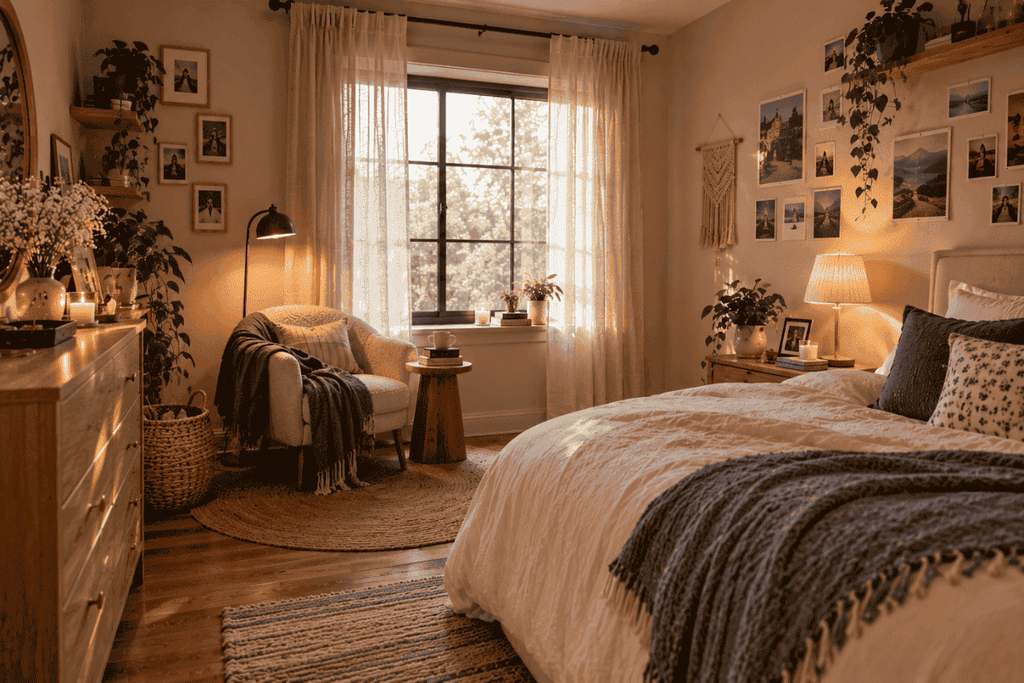
A room can have beautiful neutral bedding and perfectly chosen furniture, but it may still feel a little impersonal if there is nothing that reflects the person who lives there.
Add a few things that genuinely mean something to you. This could be a favorite book, framed photographs, artwork from a trip, a handmade piece, or a small object that reminds you of someone or somewhere special.
You do not need to display everything you own. In fact, choosing just a few meaningful pieces can make the room feel more intentional.
For example, one framed photograph on a nightstand may feel more personal than a collection of several decorative objects. A favorite piece of artwork above the bed can also give the room character without adding clutter.
Try not to worry too much about whether every detail matches a particular decorating trend. Your bedroom should feel comfortable to you first.
The most inviting spaces usually have a little personality in them. They look lived in, but still feel peaceful.
Final Thoughts
Creating a cozy bedroom does not have to mean buying new furniture or completely changing the way your room looks.
Often, the biggest difference comes from a handful of small changes: softer lighting, more comfortable textures, a calmer color palette, less clutter, and a few personal touches that make the space feel like your own.
Start with the part of the room that bothers you most. If the bedroom feels too dark or harsh, work on the lighting. If it feels cold, add texture. If it feels crowded, remove some clutter before adding anything else.
You also do not have to finish everything in one weekend. Try one or two cozy bedroom ideas at a time and see how the room feels before moving on to the next change.
The best cozy bedroom is not necessarily the most expensive or perfectly styled one. It is the room that makes you want to slow down, get comfortable, and stay a little longer.