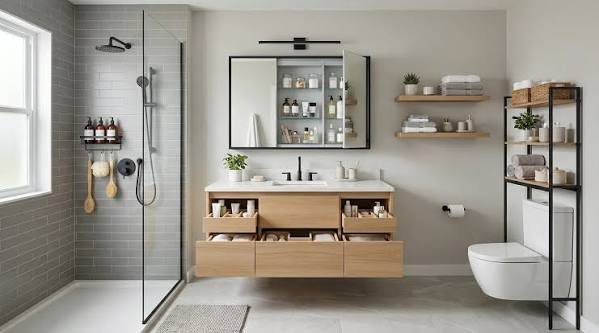
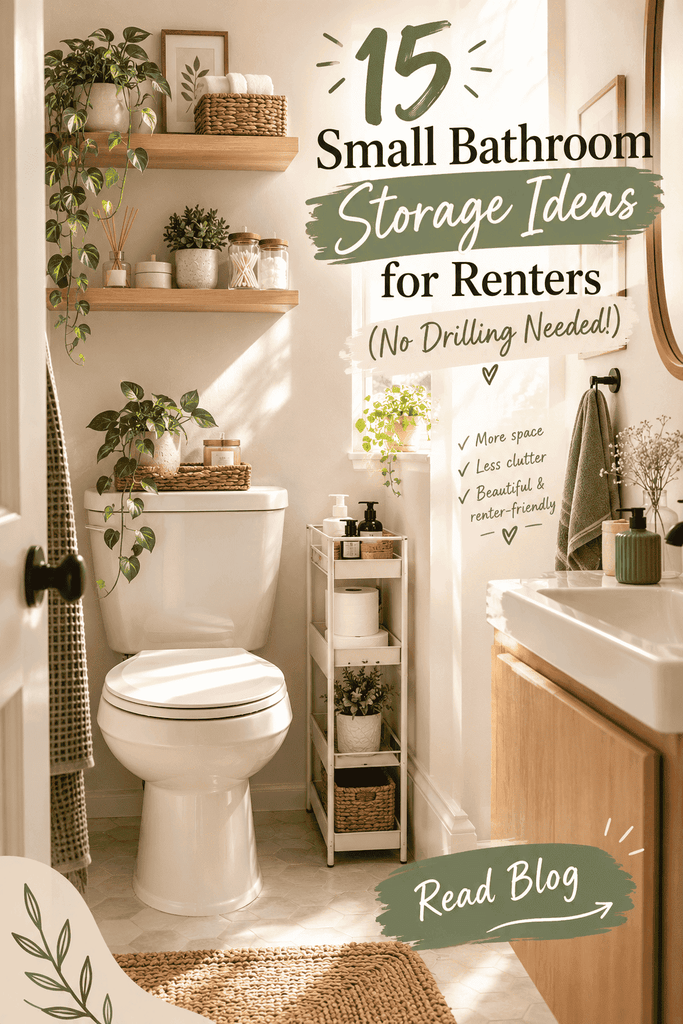
Small bathroom storage ideas for renters can make a surprisingly big difference when your bathroom has limited floor space, crowded countertops, and no built-in cabinets. The challenge is finding storage solutions that keep everything organized without drilling holes, damaging walls, or risking your security deposit.
A tiny bathroom can make even the simplest morning routine feel more stressful than it needs to be. Your skincare products crowd the sink, towels have nowhere to go, and the few available shelves seem to fill up almost immediately.
And if you rent your home, there’s another problem: you can’t always drill into the walls, install permanent cabinets, or make changes that might cost you your security deposit.
The good news? You don’t need a bigger bathroom to make the space work better.
With the right combination of over-the-toilet storage, slim organizers, removable hooks, and a few clever ways to use overlooked spaces, you can create a bathroom that feels more organized without committing to permanent changes.
These small bathroom storage ideas for renters focus on practical solutions for real homes—including bathrooms with pedestal sinks, limited counter space, and almost no built-in storage.
1. Use an Over-the-Toilet Storage Rack
When floor space is limited, the area above your toilet is one of the easiest places to add storage without changing your bathroom layout.
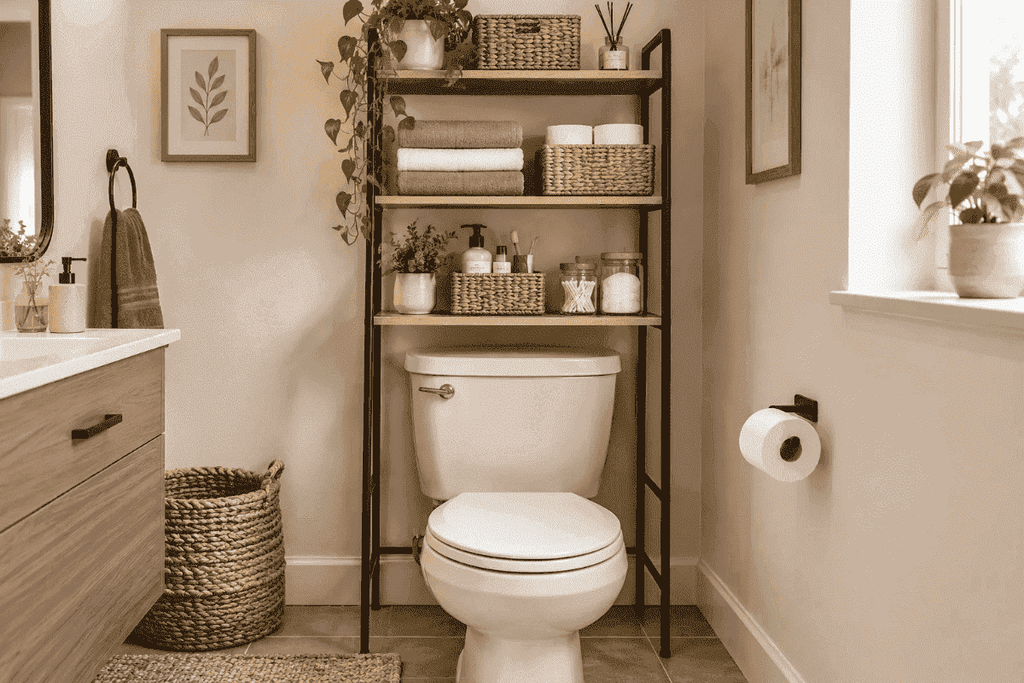
An over-the-toilet storage rack makes use of vertical space that often goes unused. You can use its shelves for folded towels, toilet paper, small baskets, and everyday bathroom essentials.
Look for a freestanding design that fits around your toilet and doesn’t require permanent wall installation. Slim metal frames work well in modern bathrooms, while natural wood shelves can make a small space feel warmer and more inviting.
Keep the lower shelf for frequently used items and reserve the upper shelves for extra towels or backup toiletries. Matching baskets can also hide smaller products and keep the shelves from looking cluttered.
Renter-friendly tip: Measure the space above and around your toilet before buying a rack. Check its stability, clearance around the tank, and whether the manufacturer requires wall attachment. If it needs to be secured to the wall, choose a suitable alternative rather than risking an unstable unit.
2. Add a Slim Rolling Storage Cart
Sometimes, the best storage solution is one that can move whenever you need it.
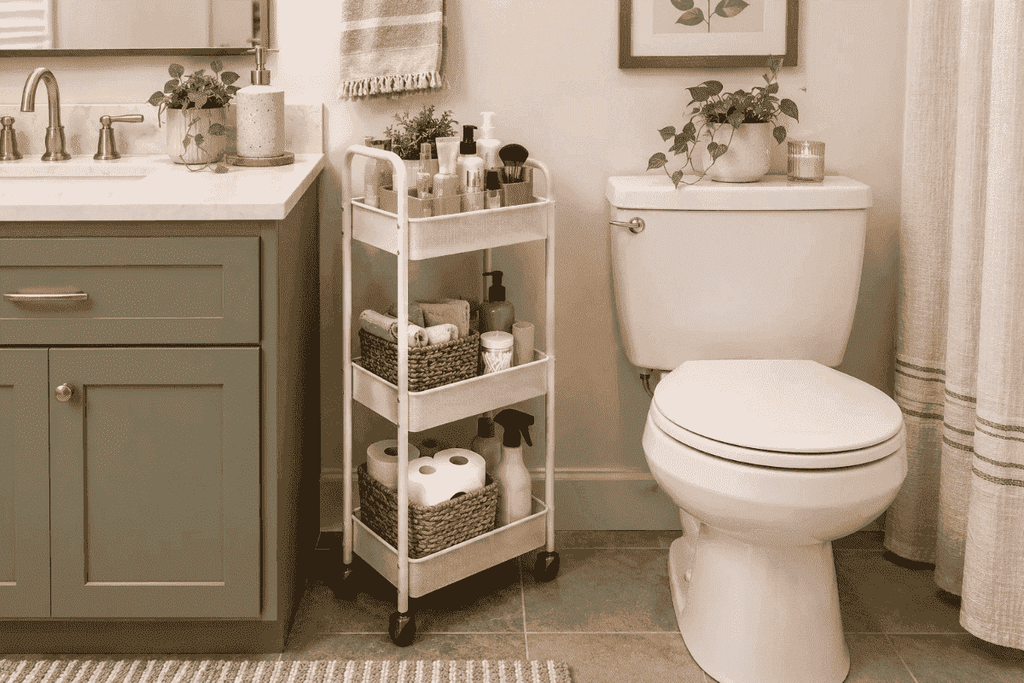
A slim rolling cart can fit into the narrow space beside a vanity, next to the toilet, or between the sink and the wall. Instead of spreading toiletries across every available surface, you can keep them together on a compact cart.
Choose a model with two or three tiers, depending on the height of your available space. The top tier can hold daily skincare and hair products, the middle can store washcloths and personal care supplies, and the bottom can hold spare toilet paper or cleaning products.
If you have a particularly narrow bathroom, measure the gap carefully before purchasing. Some carts are designed for tight spaces, but the wheels, handles, and frame can add extra width.
For a cleaner appearance, use small containers to group similar products together. This makes it easier to find what you need without turning the cart into another cluttered surface.
Renter-friendly tip: Choose a freestanding cart that requires no mounting. If your bathroom floor is uneven, look for locking wheels and a stable frame.
3. Install Removable Hooks for Towels and Robes
A bathroom can feel messy simply because towels, robes, and washcloths have nowhere to hang.
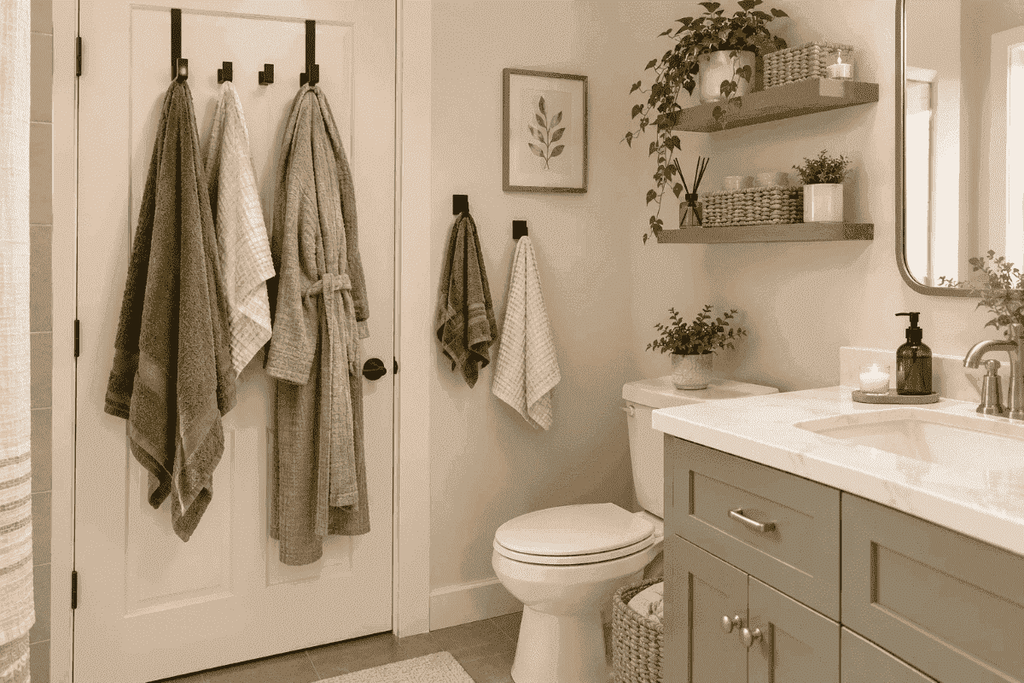
Removable hooks offer a simple way to create extra hanging space without immediately reaching for a drill. Depending on the product, they can be attached to suitable smooth surfaces such as certain tiles, glass, or finished doors.
Use separate hooks for bath towels, hand towels, and robes so everything has a designated place. The back of the bathroom door can be especially useful because it provides storage without taking up valuable wall or floor space.
For a coordinated look, choose hooks in a finish that complements your existing fixtures. Matte black, brushed metal, and simple white designs can blend into many bathroom styles.
Before installing any adhesive hook, read the manufacturer’s instructions and check the recommended weight limit. Allow the adhesive to cure for the specified time before hanging anything.
One important detail: Not every removable hook is suitable for every surface. Textured tile, peeling paint, damp walls, and delicate finishes may cause problems. Check your lease and test compatibility before installing anything.
4. Make the Most of a Pedestal Sink With an Organizer
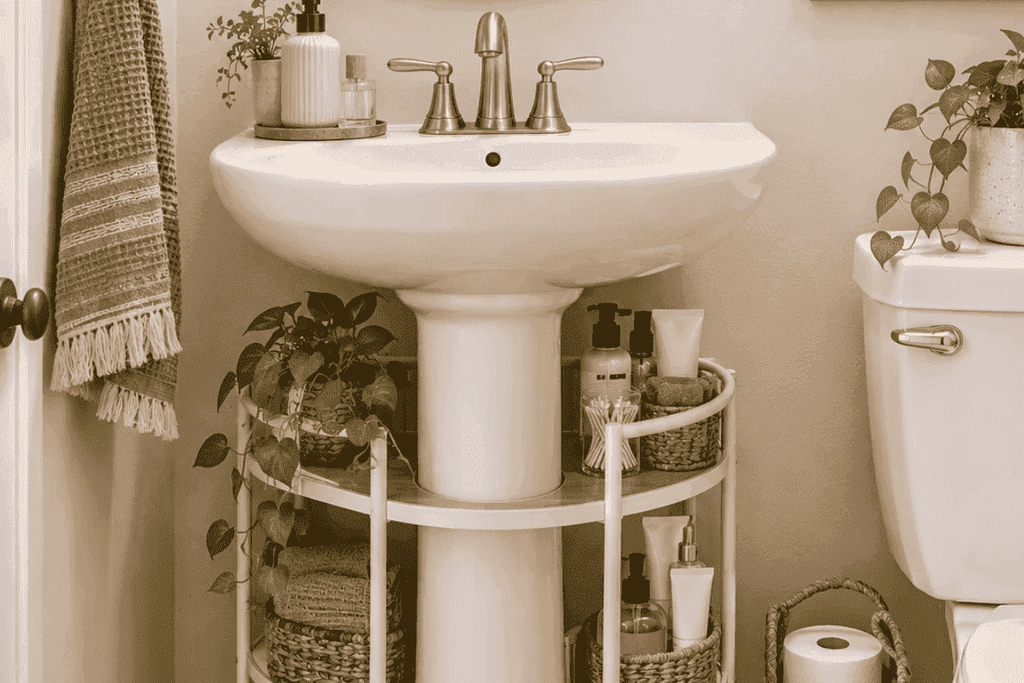
Pedestal sinks can look elegant, but they often create one of the biggest storage challenges in a small bathroom: there is almost nowhere to put anything underneath.
Instead of trying to squeeze a traditional cabinet around the curved base, look for a slim pedestal-sink organizer designed to fit the available space.
Some organizers wrap around the sink’s pedestal, while others use a narrow frame or small shelves to create storage around the plumbing. Choose one that leaves enough room for your feet and doesn’t interfere with cleaning.
You can also place a small freestanding basket beside the pedestal to hold toilet paper, extra washcloths, or a few everyday products.
If your sink has a little counter space, keep only your most-used items there. A compact tray for hand soap and one or two daily essentials can make the area feel much less crowded.
Renter-friendly tip: Avoid drilling into the sink or attaching heavy accessories to the plumbing. Check that any organizer fits securely without putting pressure on pipes or the basin.
5. Use a Freestanding Bathroom Cabinet
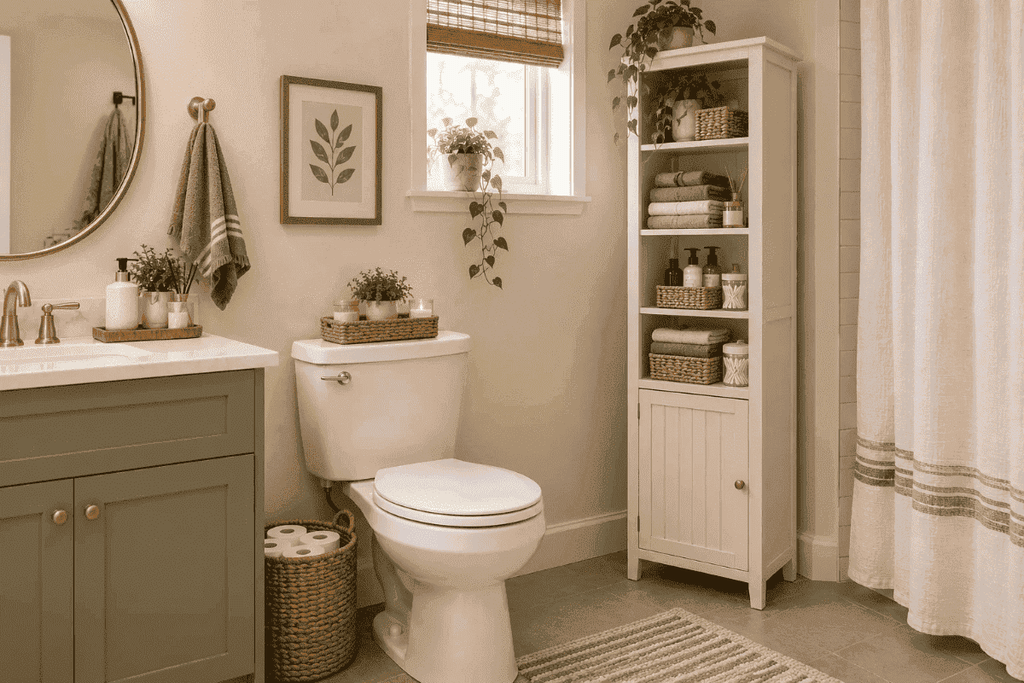
If you need more concealed storage, a narrow freestanding cabinet can be worth considering.
Unlike a wall-mounted cabinet, a freestanding unit can provide shelves and doors without requiring permanent installation. It also helps hide products that might otherwise make your bathroom look busy.
Look for a tall, slim cabinet that fits into an unused corner or beside the vanity. Adjustable shelves are particularly useful because shampoo bottles, folded towels, and cleaning supplies all need different amounts of space.
For a small bathroom, a cabinet with a light finish or a simple design can feel less visually heavy than a bulky piece of furniture. You don’t need to fill every shelf, either. Leaving a little breathing room makes it easier to keep everything organized.
Before buying one, measure the available floor area and check that the doors can open fully without hitting the toilet, shower, or bathroom door.
Renter-friendly tip: Confirm that the cabinet can stand safely without being permanently attached. Tall, narrow cabinets may still require anti-tip anchoring, especially in homes with children. Follow the manufacturer’s safety guidance and your rental agreement.
6. Organize the Space Under Your Sink
If your bathroom has a vanity, the space underneath the sink may hold more storage potential than you realize.
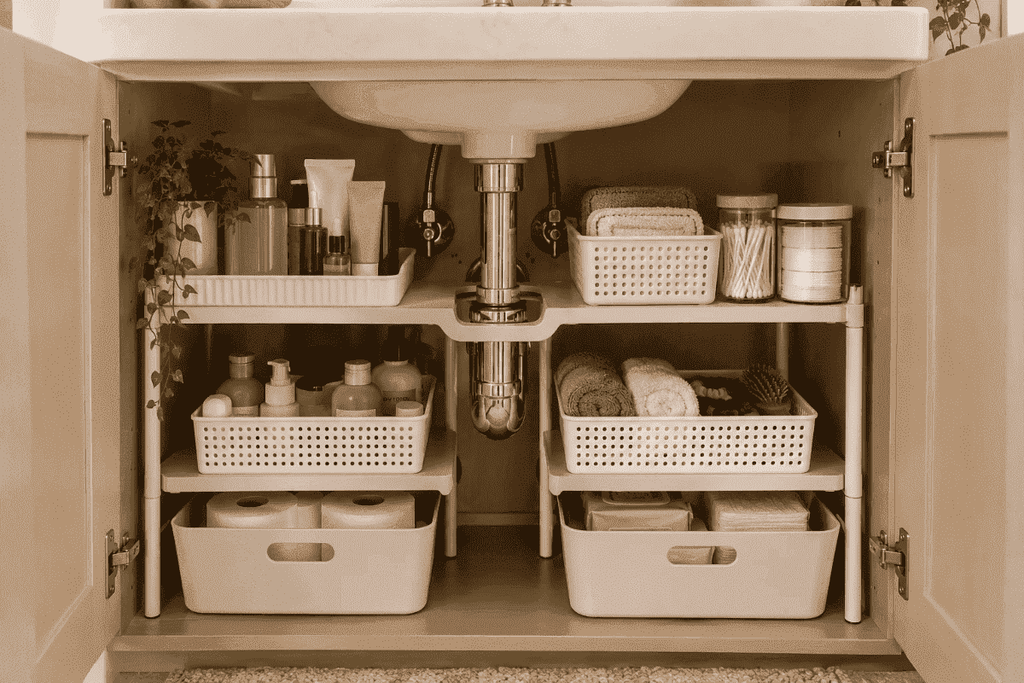
The problem is that plumbing pipes often make the area awkward. A regular storage box may not fit around the drain, while loose bottles can quickly turn the cabinet into a jumble.
An adjustable under-sink organizer can help you work around the pipes. Look for a two-tier design with a cutout for plumbing or adjustable shelves that fit your cabinet dimensions.
Use one section for daily toiletries and another for backup supplies. Small bins can hold hair accessories, spare soap, cotton pads, or other items that tend to get lost at the back of a cabinet.
If the cabinet is deep, keep frequently used products toward the front. This prevents you from having to remove half the contents every time you need something.
A simple organizing rule: Store only bathroom-safe products in this area, and keep anything that could leak away from items that might be damaged by moisture.
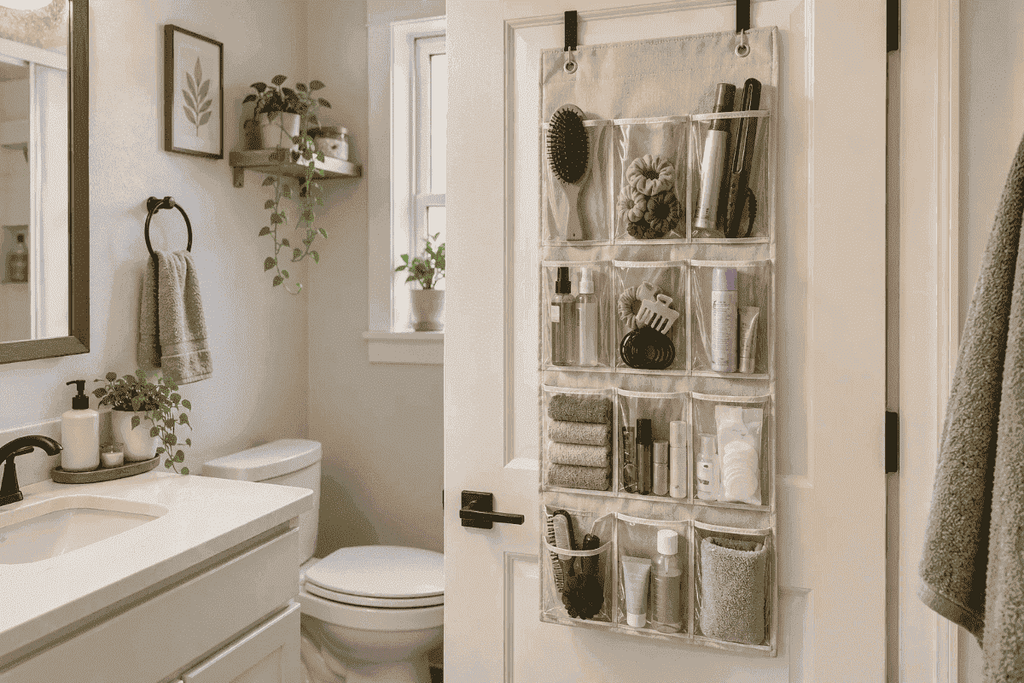
7. Hang a Storage Organizer Over the Bathroom Door
The back of your bathroom door is valuable storage space, particularly if your walls are already full.
An over-the-door organizer can provide pockets, hooks, or shelves for items that would otherwise take up room around the sink. Depending on the design, you can use it for hairbrushes, styling accessories, washcloths, or smaller toiletry containers.
For a lightweight option, consider a fabric organizer with clear pockets. Being able to see the contents makes it easier to find things quickly, especially when you’re getting ready in the morning.
If you need more substantial storage, look for a purpose-made over-the-door rack with a slim profile. Make sure it doesn’t prevent the door from closing or scrape against the frame.
This idea is particularly helpful in shared bathrooms because everyone can have a designated pocket or section for personal items.
Renter-friendly tip: Check the thickness of your door and the organizer’s mounting requirements. Add protective padding only if the manufacturer permits it, and make sure the hardware won’t scratch the finish.
8. Add a Tension Pole Shelf in an Unused Corner
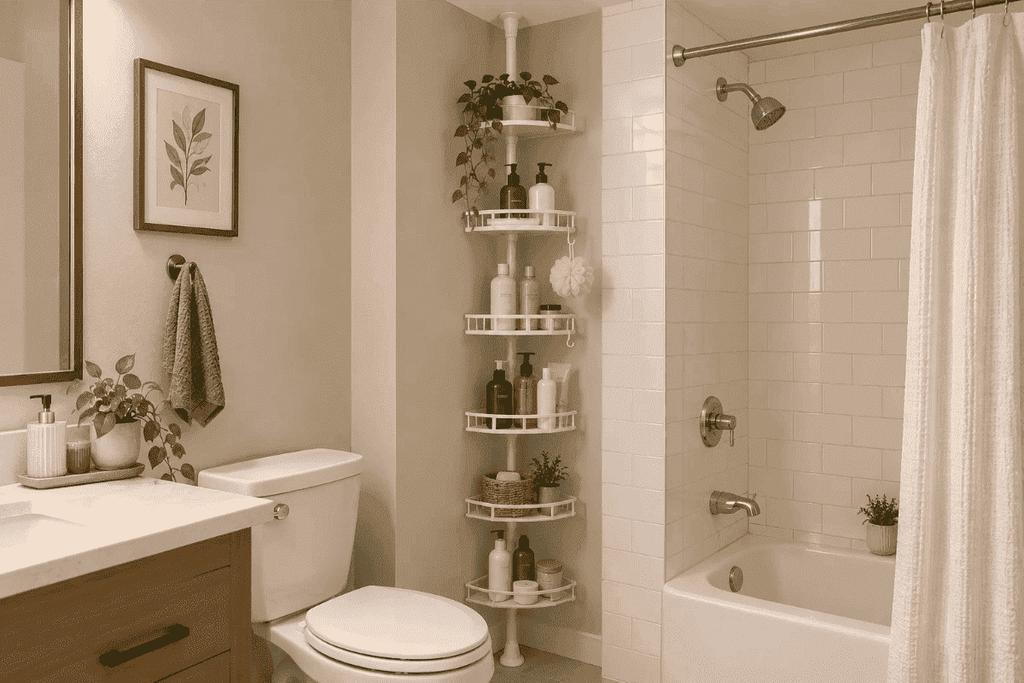
When wall drilling isn’t an option, a tension pole shelf can create vertical storage using pressure between the floor and ceiling.
These units often include several adjustable baskets or shelves, making them useful for storing shampoo, conditioner, body wash, and other shower essentials.
A corner near the bathtub or shower may be a good place for one, provided there is enough room to move comfortably. Some designs are intended specifically for shower areas, while others are better suited to dry parts of the bathroom.
Before buying, check the ceiling height, floor-to-ceiling range, and material compatibility. A tension shelf must be installed according to the manufacturer’s instructions to remain stable.
Avoid overloading the baskets or placing heavy glass containers high above the floor. Keep the products you use most often within easy reach.
Renter-friendly tip: Make sure the tension mechanism is suitable for your ceiling and floor surfaces. Avoid installing one against a weak, damaged, or delicate surface, and inspect it periodically for movement.
9. Use Stackable Bins Inside Cabinets and on Shelves
Sometimes, you don’t need more storage space. You need to make better use of the storage you already have.
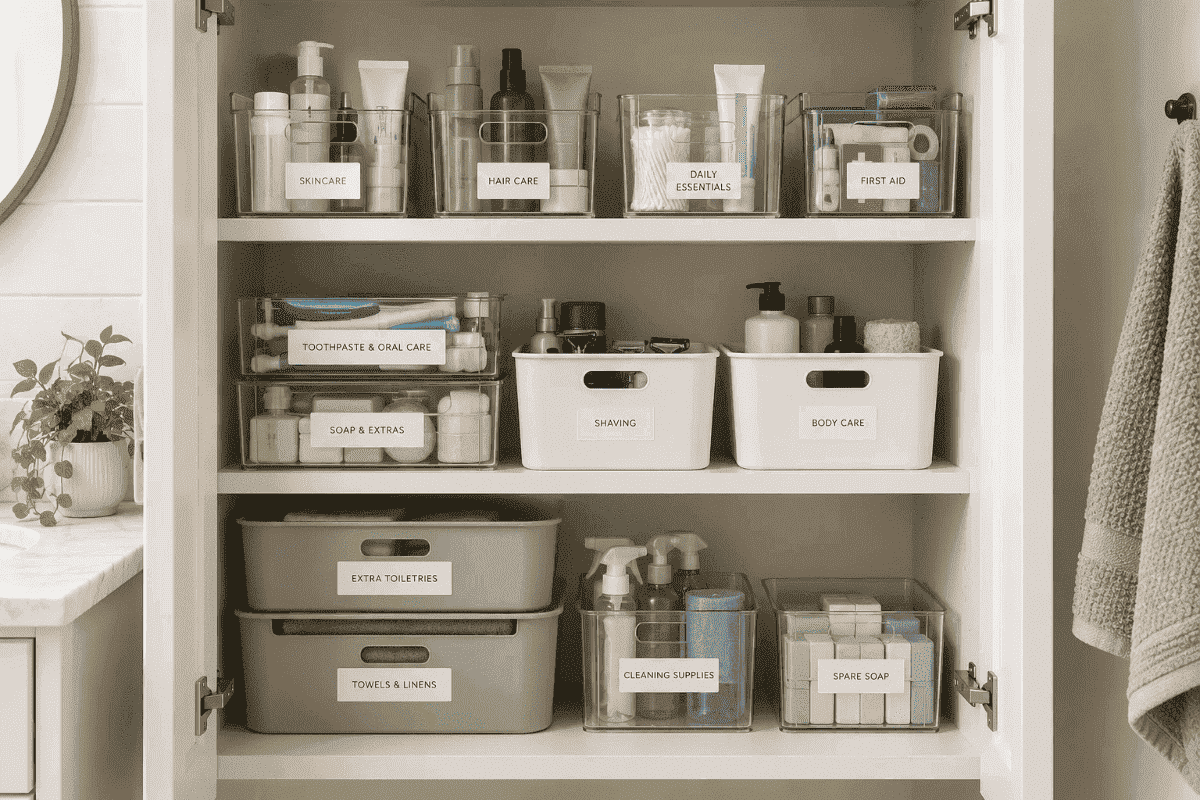
Stackable bins can help organize toiletries, cleaning supplies, spare soap, and personal care products without requiring any installation.
Clear bins are useful when you want to see what’s inside at a glance. Neutral or opaque bins create a more uniform appearance and hide packaging that doesn’t match your bathroom.
You can assign each bin a purpose, such as daily skincare, hair care, first-aid supplies, or extra toiletries. If you share the bathroom, separate bins can also make it easier for each person to keep their belongings together.
Measure your shelves before choosing containers. Bins that are too tall may waste vertical space, while oversized containers can make items difficult to reach.
A small improvement that helps: Use shallow bins for products you reach for every day and deeper containers for backups. This keeps frequently used items accessible without requiring you to unpack everything.
10. Store Extra Toiletries in a Hanging Shower Caddy
Shampoo bottles, conditioners, body washes, and facial cleansers can take over a shower ledge surprisingly quickly.
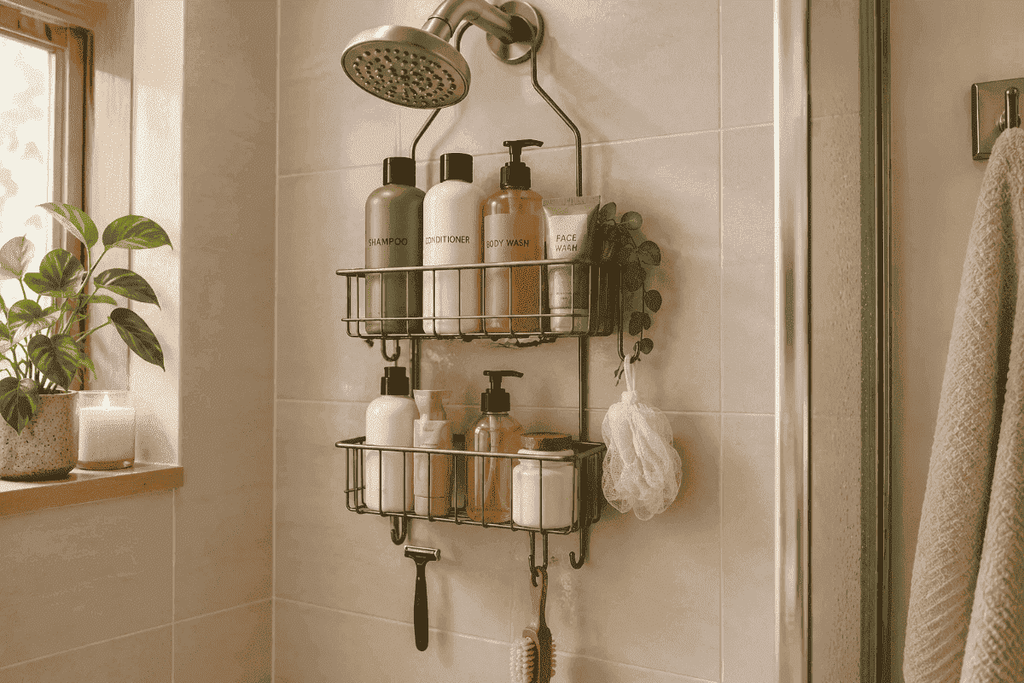
A hanging shower caddy creates a designated place for these products and keeps them from collecting along the edges of the bathtub.
Depending on your shower setup, you might choose a caddy that hangs over the showerhead, attaches to a suitable shower rod, or uses a compatible suction mounting system.
Look for drainage holes, rust-resistant materials, and enough space for the bottles you actually use. A compact caddy is often more practical than a large one filled with products you rarely touch.
If you have a shared shower, consider keeping personal items in separate small baskets that can be carried in and out.
Renter-friendly tip: Check the showerhead finish, door clearance, and mounting compatibility before choosing a caddy. Suction products generally need a clean, smooth, compatible surface and may not work well on textured tile or grout.
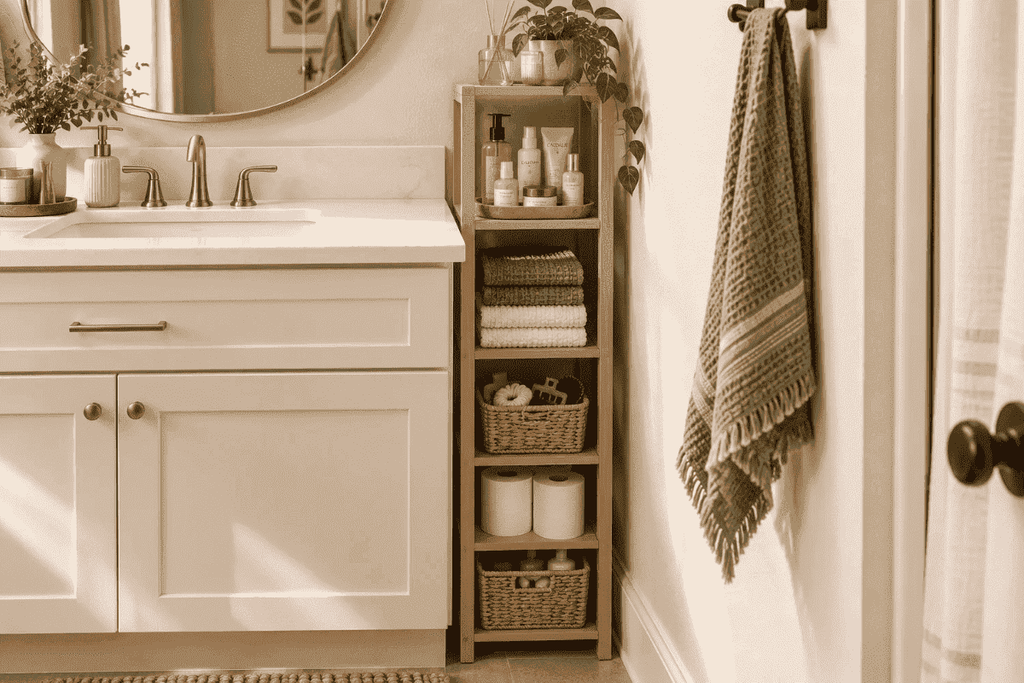
11. Create Extra Space With a Narrow Shelf Beside the Vanity
The narrow gap between a vanity and the wall can look too small to be useful. With the right shelf, however, it can become a convenient place for everyday essentials.
A slim freestanding shelf can hold skincare products, folded hand towels, toilet paper, or a small basket of hair accessories. Choose a design that uses the available width without blocking drawers, cabinet doors, or walkways.
For a cohesive look, coordinate the shelf with your existing bathroom finishes. Natural wood can soften a white bathroom, while a simple white or metal shelf can blend into a modern space.
If you have very little counter space, use the shelf for the items that would otherwise crowd the sink. Keep only a few products on display and place smaller items in a tray or basket.
Before you buy: Measure the full gap, including baseboards and handles. Leave enough room to clean behind the shelf and make sure it doesn’t create an obstacle in a narrow walkway.
12. Use Magnetic Organizers for Small Metal Items
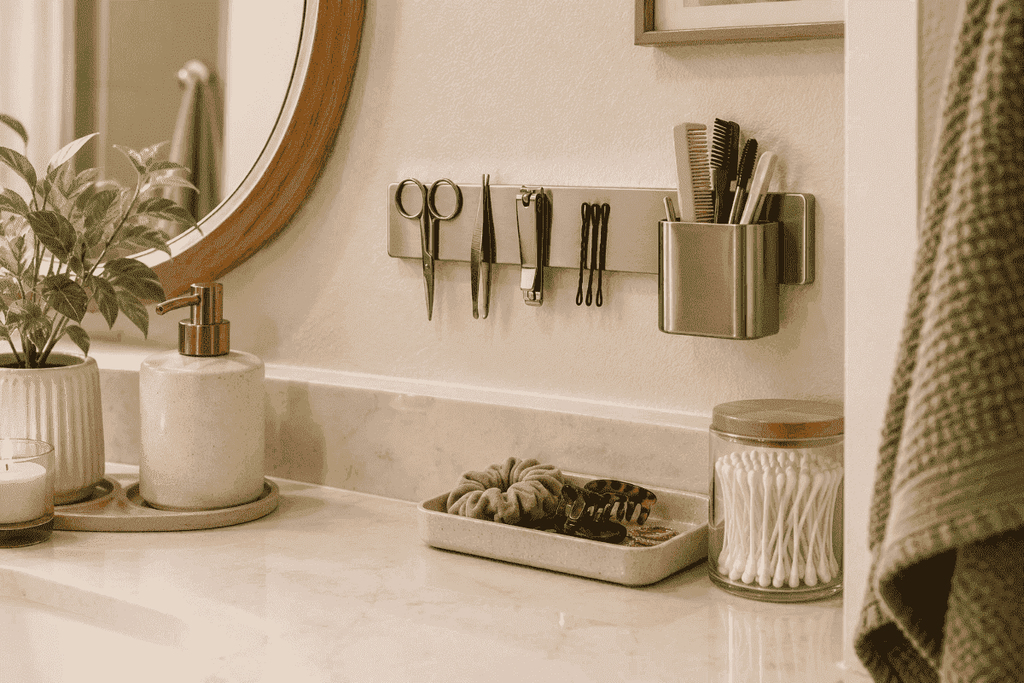
Tiny bathroom items have a habit of disappearing into drawers, baskets, and countertop corners.
Hairpins, tweezers, nail clippers, and small grooming accessories can be particularly difficult to organize. Magnetic organizers offer a clever alternative if you have a suitable metal surface or can use a magnetic board that stands independently.
For example, a small magnetic strip designed for bathroom or grooming accessories can keep compatible metal items together. A freestanding magnetic container can also work on a shelf or vanity.
The key is to choose an organizer intended for the items you want to store. Not every grooming tool is magnetic, and small accessories should be kept out of reach of children.
If you don’t have an appropriate metal surface, a small divided tray may be a simpler solution.
Renter-friendly tip: Avoid screwing a magnetic strip into the wall unless your landlord has approved it. Choose a freestanding option or a removable mounting method that is suitable for your specific surface.
13. Put a Small Basket Beside the Toilet
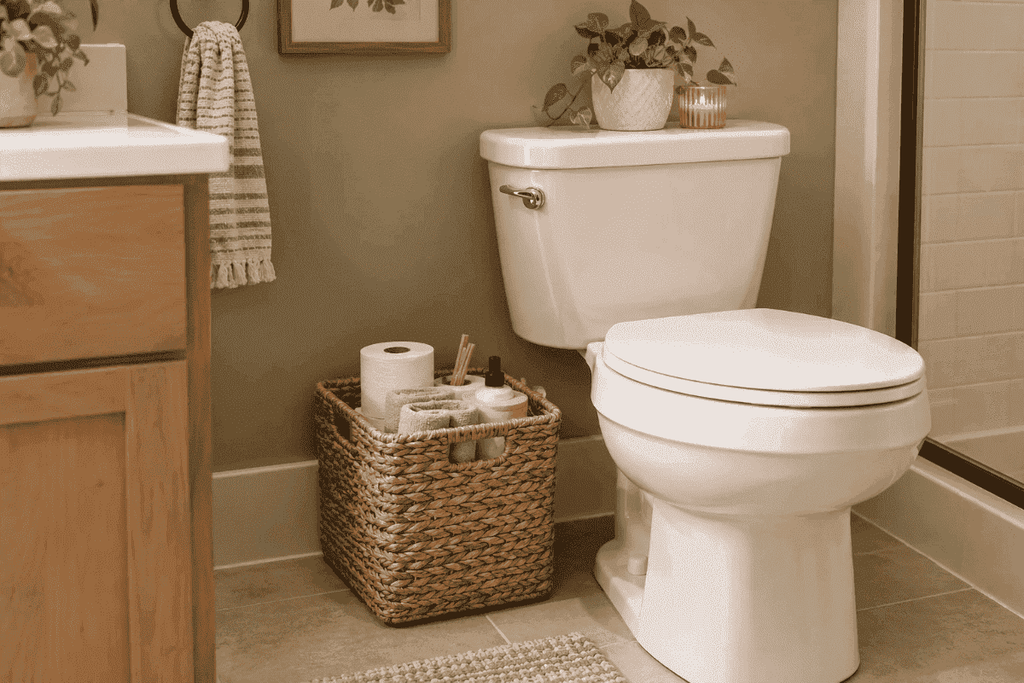
Not every bathroom needs a large storage unit. Sometimes, one thoughtfully placed basket can solve a surprisingly annoying problem.
A compact basket beside the toilet can hold spare toilet paper, extra hand towels, or a few neatly arranged bathroom essentials. It makes supplies easy to reach without adding another cabinet or shelf.
Choose a basket that fits the available floor space and is easy to move when cleaning. Woven baskets can add warmth to a neutral bathroom, while plastic or coated containers are often easier to wipe clean in damp areas.
If you prefer a more polished look, use a basket with a lid to conceal the contents. Just make sure it is easy to open when you need something.
Keep the basket away from areas where water regularly splashes, and avoid storing paper products directly on a damp floor.
Renter-friendly tip: This is one of the easiest solutions because it requires no installation. You can move it, repurpose it, or take it with you when you leave.
14. Add a Freestanding Towel Stand
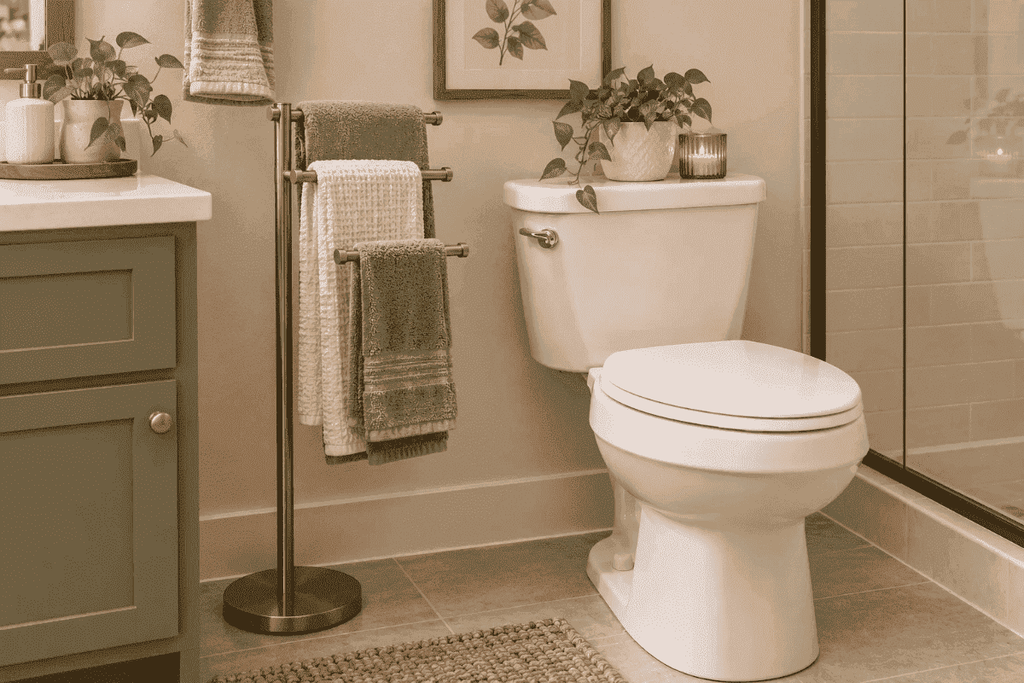
Wet towels can make a small bathroom feel disorganized, especially when there isn’t enough wall space for a towel bar.
A freestanding towel stand provides a place to hang towels without permanently attaching anything to the walls. Depending on the design, it may have one or several bars for bath towels and hand towels.
Choose a compact model with enough space between the bars for air to circulate. Towels packed too closely together can take longer to dry, particularly in a bathroom with limited ventilation.
Place the stand where it won’t interfere with the door, shower access, or the main walkway. If your bathroom is extremely small, a single-bar stand may be more practical than a wider rack.
For a coordinated appearance, select a finish that complements your faucet, shower fixtures, or cabinet hardware.
Renter-friendly tip: Check the stand’s base dimensions and stability before purchasing. A freestanding design is convenient, but it still needs to remain upright when loaded with damp towels.
15. Use Removable Shelf Solutions for Everyday Essentials
If you want a little extra storage near the sink or shower, removable shelves can be an option—but choosing the right type matters.
Some shelves use adhesive mounting systems, while others rely on suction cups or a freestanding design. Each method has different surface and weight requirements, so there isn’t one solution that works for every rental bathroom.
A small shelf can hold hand soap, a toothbrush holder, skincare products, or other lightweight items. Keeping these essentials together helps clear the countertop and makes the bathroom easier to clean.
Before installing a removable shelf, check the manufacturer’s instructions for surface compatibility, weight limits, and moisture exposure. Avoid placing heavy glass bottles or fragile items on a shelf that hasn’t been designed to support them.
If your walls have textured tile or your landlord doesn’t allow adhesive products, consider a countertop organizer or a freestanding shelf instead.
Renter-friendly tip: Test any permitted mounting system carefully and remove it according to the manufacturer’s instructions. Even products advertised as damage-free can affect certain finishes or paint.
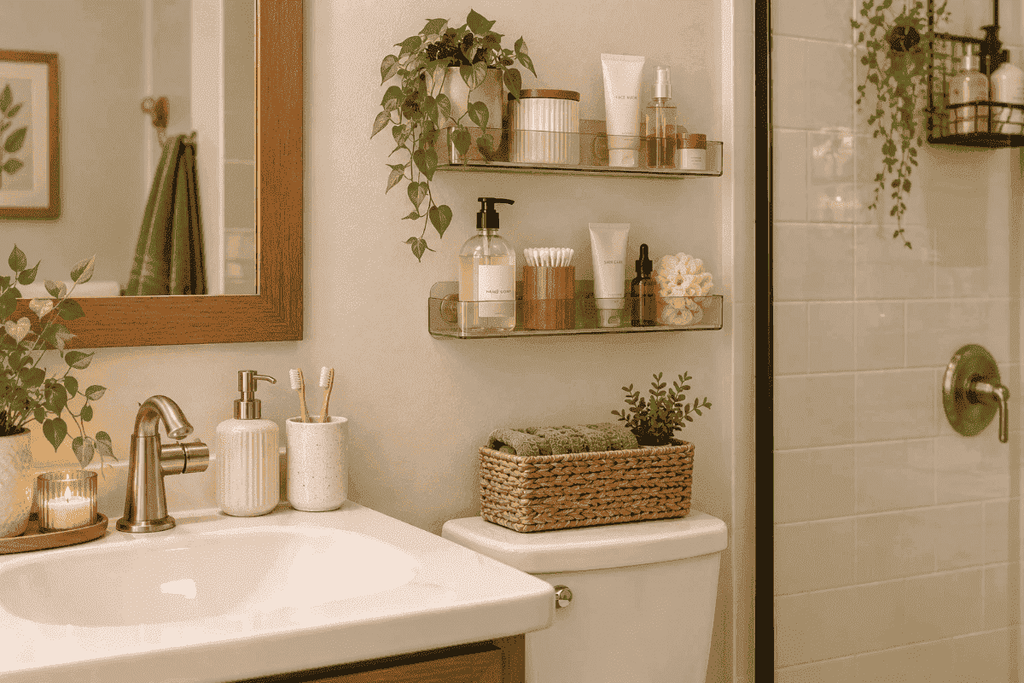
How to Choose the Best Small Bathroom Storage Ideas for Your Rental
You don’t need to try all 15 ideas to make your bathroom more functional. The best setup depends on the layout, the storage you already have, and how much space you can realistically spare.
Here are a few things to consider before buying anything.
If You Have a Pedestal Sink
Start with a narrow freestanding organizer, a small basket, or a slim rolling cart. These options can provide storage without requiring a bulky vanity or permanent installation.
If You Have Almost No Floor Space
Look upward and consider an over-the-toilet rack, a suitable tension shelf, or an over-the-door organizer. Always check stability and clearance before choosing a vertical storage unit.
If Your Countertop Is Always Cluttered
Use a small tray for daily essentials and move backup products into bins or a cabinet. Keeping only your most-used items near the sink can make the entire bathroom feel calmer.
If You Cannot Attach Anything to the Walls
Prioritize freestanding furniture, baskets, rolling carts, countertop organizers, and compatible over-the-door storage. These options can be easier to move when your lease ends.
If You Share a Small Bathroom
Give each person a separate basket or bin for personal products. Store shared supplies in one designated place so everyone knows where to find them.
A Few Renter-Friendly Storage Mistakes to Avoid
Even a good storage solution can become frustrating if it doesn’t fit your bathroom or creates a new problem.
- Buying before measuring: A shelf that looks compact online may block a door or leave too little room to move.
- Overloading removable hooks: Adhesive strength varies by surface, humidity, and product design. Follow the manufacturer’s weight limits.
- Ignoring moisture: Cardboard boxes and untreated materials can deteriorate in damp bathrooms. Choose storage that suits the environment.
- Keeping too many products: Extra organizers won’t solve clutter if every shelf is filled with products you no longer use.
- Blocking plumbing access: Avoid placing storage where it makes it difficult to inspect or reach pipes and shutoff valves.
- Choosing unstable tall furniture: Some freestanding units still require anti-tip anchoring. Follow safety instructions rather than assuming every freestanding product is safe without it.
A little planning can help you avoid unnecessary purchases and choose storage that works for your bathroom long-term.
Make Your Small Rental Bathroom Work Better
A small bathroom doesn’t have to feel crowded just because it lacks built-in storage. Sometimes, the biggest improvement comes from using one overlooked corner, moving everyday products off the sink, or giving towels and toiletries a proper place.
Start with the problem that bothers you most. If your countertop is overflowing, try a compact organizer. If towels have nowhere to hang, consider removable hooks or a freestanding towel stand. If you have a pedestal sink, look for a storage solution designed around its shape.
The goal isn’t to fill every empty space with another organizer. It’s to make your bathroom easier to use, easier to clean, and more comfortable to walk into each morning.
And the best part? With carefully chosen renter-friendly solutions, you can create a bathroom that feels more organized and personal without committing to permanent changes.
Save this post on Pinterest so you can revisit these small bathroom storage ideas when you’re ready to organize your space.